Leash reactivity is one of those things that can make walking your dog a nightmare. Leash reactivity refers to a dog that barks or lunges at other dogs or triggers when on a lead.
To exacerbate the problem, an aroused dog will usually pull on the lead. If the lead is attached to a collar, his breathing will be restricted, which adds to the stress of the dog. His level of stress will only serve to push him closer over threshold. All before you have even seen another dog or trigger. Therefore, as soon as your dog does see another dog or trigger, he is going to tip straight over threshold. This essentially means that he has no control over his emotions. The best thing you can do at this point is turn around and increase the distance between you and the thing.
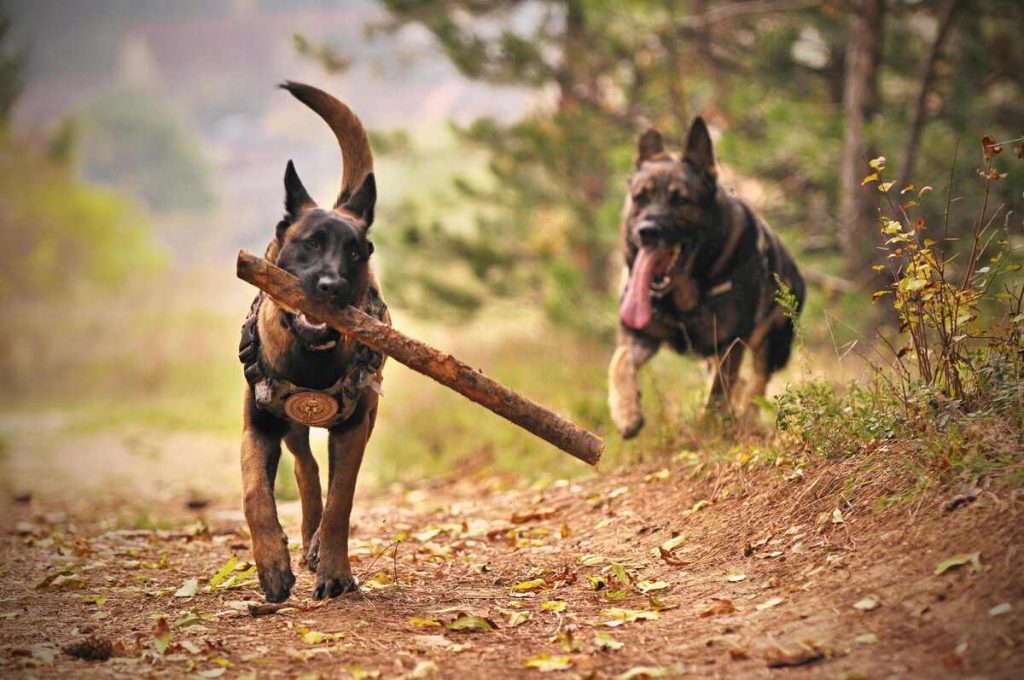
These situations are not only not enjoyable, but it can also be extremely embarrassing. Prior to becoming a dog trainer, I owned 2 German Shepherds that I would walk each morning at 5am and each night at10pm for fear that we would run into a person or dog. Walking was never enjoyable because of the constant pulling. I tried every type of harness, halti, check chain (I no longer morally support the use of check chains) without success. Once I learnt about canine behaviour and the psychology behind it, I identified that my dogs were not only highly stressed when being walked but also suffering from fear aggression.
Why are dogs reactive? There are a number of reasons for this. The first one is called the ‘flight or fight’ mode. So, when your dog is on a lead, he may feel trapped if he sees something that is making him nervous. He can’t flee or fight back because he is attached to a lead. This is especially so if a previous encounter went wrong.
Another reason is the ‘I’ll get you before you get me’. This could be based on a previous bad experience with another dog.
It works. Dogs only repeat behaviour that works for them. If your dog is barking and lunging at another dog and the owner of the other dog crosses the road and increases the distance between you, your dog has been positively reinforced for his behaviour because the ‘big scary thing’ went away.
Face-to-face meetings on footpaths. Dogs usually approach each other from the side, so a front-on meeting may make puppy feel uncomfortable.
Over-excitement to see other dogs. This is when puppy is so excited to see another dog that he is barking and lunging in anticipation of a greeting.
The final reason for reactivity is the association between seeing a trigger and the tightening of the lead. This can become a significant issue as the dog may injure himself if the collar is tightening around the neck. Puppy then associates fear and pain with the trigger – not the pulling on the lead.
So, what can we do about it? It may be the case that he doesn’t know what else to do. In his mind he is reacting exactly how he should react when he is feeling threatened or scared. It could just be that you need to teach him a different behaviour.
There are 2 great options available to you. The first is ‘look’ and the other is a ‘U-turn’.
The goal with the look is when your dog sees the trigger, he is going to automatically turn around and look at you. The U-turn is to be used if a trigger surprises you. For example, if you turn a corner and see another dog walking towards you.
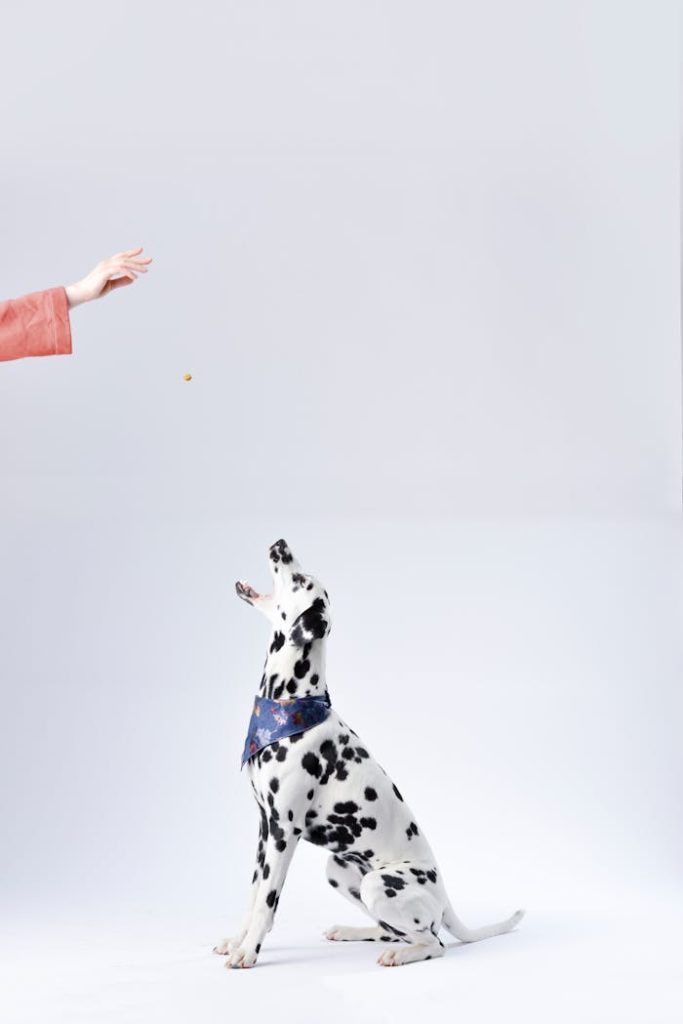
To train an auto-watch, put your puppy on a short leash and grab some high-value treats. It must be very high-value treats – kibble won’t cut the mustard! You are asking a lot of your puppy, so he needs to be highly rewarded.
Choose a route that you know you will run into something that is a trigger for your puppy. You will need to identify what his trigger is. Whether it be another dog, a person, motor vehicle, skateboard etc. Be specific.
Take puppy for a walk and the second you see a trigger, pop a treat in his mouth. The timing is extremely important. You want to produce the treat before puppy reacts, so have 1 handy and ready to go. If you are too late and puppy reacts, then you give the treat, you have just rewarded the reactivity. So it’s important to be on point.
To do this you need to keep puppy under threshold. Threshold means your dogs emotional tolerance to the trigger before he goes over threshold and reacts to it. So, you need to work out how close to the thing can you get before he goes over threshold and starts barking and lunging. If he reacts, you are too close so increase the distance.
This type of training can only be done with a dog that is under his emotional threshold. If he reacts at any time, do a U-turn and finish off the walk in a different direction. The reason for this is that once over threshold your dog’s emotional state will stay heightened for up to 3 days. This means that he can easily go back over threshold because his emotions are already higher than baseline.
So conduct a little experiment on what distance you can expose puppy without a reaction. This is called working under threshold.
Getting back to your walk…so you are walking down the street and you see another dog. If puppy is under threshold, shove that treat in front of his nose. We are pairing something good with something scary and we don’t want him to react to it. So, he sees the trigger, he gets a treat, he sees the trigger, he gets a treat. Try to get 10 repetitions. Then comes a lot of practice. Try to work with a dog that you know so enlist the help of family or friends.
Once he is practiced at this and he is regularly looking at you when he sees the trigger, try waiting 2-3 seconds before giving him the treat. You are marking the behaviour of him looking at you. Maintain the look for a couple of seconds before you give the treat.
Now the U-turn. Decide what you want to call it. It can be ‘turn’, ‘let’s go’ etc whatever you want it to be. Just pick a word and remain consistent. You will be starting to teach this behaviour in your home. Pick a room or a hallway, Hallways are good because they restrict movement and keeps your dog close to you.
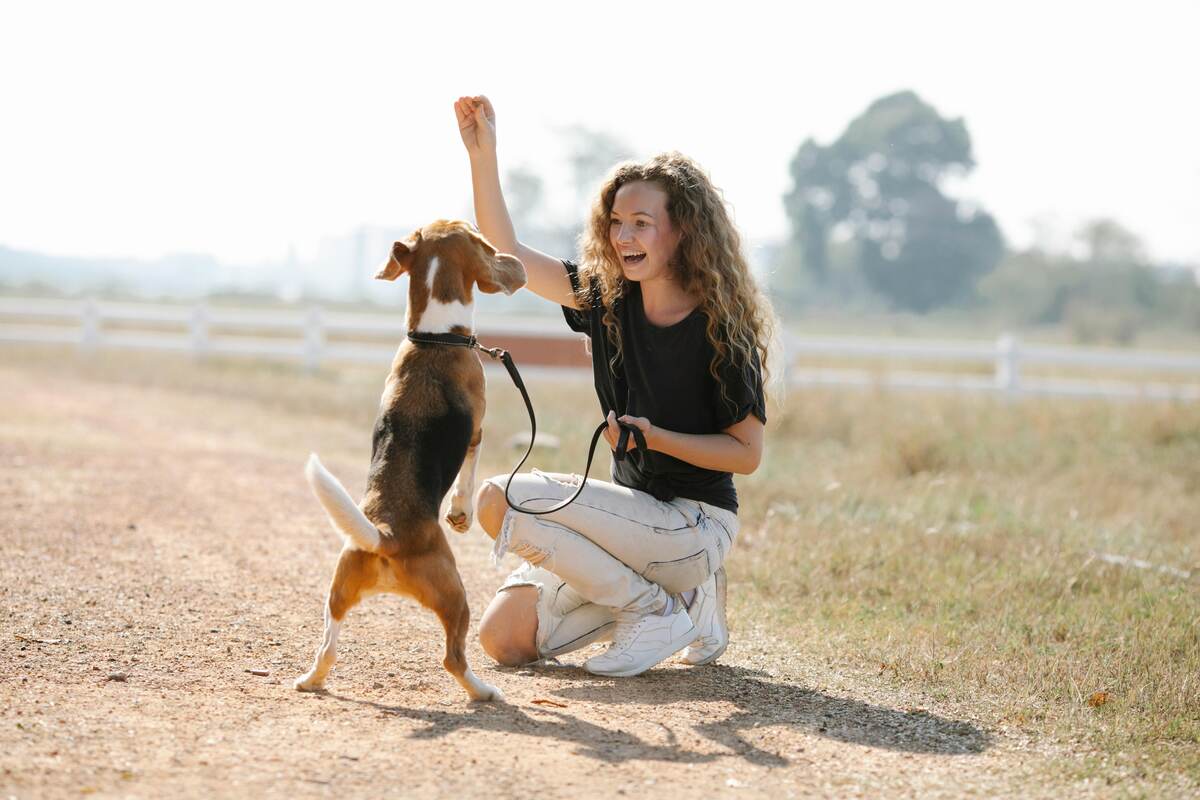
Have some high-value rewards or his favourite toy. Put puppy on a lead and as you are moving forward say ‘turn’ or whatever your word is. Use the treat or toy to lure puppy around to face the opposite direction. So, complete a 180-degree turn and keep walking. You want to mark the behaviour (walking in the opposite direction) by saying ‘yes’ and then reward puppy with a treat. Only reward after he completes the u-turn. Make sure you are luring by placing a treat in front of his nose while turning around into the opposite direction. .
Perfect the U-turn inside before adding in the 4 D’s – distance, duration, distraction, and difficulty.